Picking the Right Size: Why Smaller Assisted Living Homes Often Supply Better Care
@sethkpgj770
September 28, 2026 · 19 min read
Business Name: BeeHive Homes of Raton
Address: 1465 Turnesa St, Raton, NM 87740
Phone: (575) 271-2341
BeeHive Homes of Raton
BeeHive Homes of Raton is a warm and welcoming Assisted Living home in northern New Mexico, where each resident is known, valued, and cared for like family. Every private room includes a 3/4 bathroom, and our home-style setting offers comfort, dignity, and familiarity. Caregivers are on-site 24/7, offering gentle support with daily routines—from medication reminders to a helping hand at mealtime. Meals are prepared fresh right in our kitchen, and the smells often bring back fond memories. If you're looking for a place that feels like home—but with the support your loved one needs—BeeHive Raton is here with open arms.
1465 Turnesa St, Raton, NM 87740
Business Hours
Families hardly ever start by asking, "How huge is the building?" when they start searching for assisted living or senior care. They ask about safety, kindness, activities, expenses, maybe memory care. Yet, after years of walking households through choices and working inside both big senior neighborhoods and small residential homes, I have seen one element predict quality more reliably than nearly anything else: size.
The number of homeowners in a home shapes practically every part of elderly care. It impacts how well staff understand everyone, how rapidly subtle health modifications are noticed, how versatile regimens can be, and whether respite care seems like authentic relief or a difficult interruption.
Large centers can look outstanding, with chandeliers, bistros, and busy calendars. Smaller assisted living homes often sit quietly in residential areas, in some cases transformed from single family homes, with 6 to 10 residents and a tiny parking area. From the street, they can seem typical. Inside, the difference in lived experience is frequently dramatic.
This post focuses on that distinction, and on when a smaller setting may provide much better take care of an older adult you love.
What "small" really implies in assisted living
In practice, "small" typically describes assisted living homes with somewhere between 4 and 16 citizens. Licensing categories vary by state, but you may see terms like:
Residential care home.
Adult household home. Board and care home. Group home. Care home or micro community.These are not marketing labels even regulative ones, however the pattern is similar. Small homes generally:
Operate in a house or a small, home like building.
Have only one or more typical areas. Use a basic, shared kitchen and dining space. Keep staffing tight, typically with one or two caretakers present at a time, plus on call support.Larger assisted living communities may have 50, 100, even 200 residents throughout numerous wings and floors. They typically consist of different dining-room, specialized memory care units, physical treatment fitness centers, beauty parlor, and a more formalized administrative structure.
Both models can be certified as assisted living and can legally provide comparable levels of assistance with activities of daily living: bathing, dressing, medication pointers, movement help, toileting, and standard health monitoring. The guidelines do not completely catch how different the everyday experience feels in a home with 8 homeowners versus a campus with 120.
Why size matters more than most households realize
The most truthful method to explain it is this: smaller homes make it more difficult to conceal. That works in favor of the resident.
In a neighborhood with 80 citizens, a team member might do their finest, but they are managing more faces, more homes, more calls. When staffing is tight, locals who are peaceful, introverted, or cognitively impaired are at greater risk of flying under the radar. A slight shift in mood, a slower gait, a small decrease in hunger can be simple to miss when a caregiver's job list is large.
In a small assisted living home, there are fewer locations to disappear to. Meals occur at one table or in one space. Personnel and residents see each other repeatedly throughout the day, not simply at set up care times. When routines are that intimate, changes stand out.
This has useful impacts:
An early urinary tract infection is captured because somebody notices that Mrs. Lopez is asking for the bathroom more often and seems "foggy" compared to yesterday.
A subtle medication negative effects is flagged because Mr. Kumar, who usually finishes breakfast, has left half his plate untouched three days in a row. A quiet resident who rarely grumbles is seen recoiling when moving out of a chair, and the team member has adequate time and relationship to ask follow up questions.Health care specialists call this connection and familiarity. Families typically explain it more simply: "They actually understand Mom here."
How smaller homes change staff relationships
Caregiver ratios are essential, but they do not tell the complete story. A large assisted living facility may advertise 1 employee for each 10 citizens. A small home might state 1 to 5 or 1 to 8. On paper, these appearance comparable when you consider day versus night, peak versus low activity times.
The difference lies less in the numbers and more in the pattern of contact.
In a big building, staff projects change routinely. One week, a resident might have a particular aide aiding with bath and dressing. The next week, somebody else covers that hallway due to staffing modifications. Supervisors do their best to preserve continuity, but with lots of employees and several shifts, variation is inevitable.
In a small assisted living home, there are simply less people on the schedule. The exact same caretaker might assist with breakfast, medication pointers, showers, and evening regimens for the same handful of homeowners, day after day. With time, this consistency allows staff to:
Learn each person's standard routines and quirks.
Pick up on small deviations that might indicate trouble. Develop enough trust that citizens share issues more freely. Notification relational problems, such as 2 residents who argue consistently or a brand-new resident who feels left out.One caregiver as soon as told me, about a six resident home where she worked, "There is no faking it here. If you are in a tiff, they all feel it. And if one of them is off, we feel that too." That shared visibility can be emotionally demanding, however it keeps the caregiving relationship authentic.
Daily life: routine, flexibility, and control
Many families think of assisted living as a location with packed activities calendars and social choices at every hour. Large neighborhoods work hard to offer that: movie nights, bingo, lectures, workout classes, getaways, spiritual services, live music. For some senior citizens, specifically those who are outgoing and mobile, this variety is energizing.
Small homes rarely have that scale of programs. Rather, they use a quieter rhythm. The living-room may host a basic workout session with light weights. A volunteer comes over to play guitar on Thursdays. A staff member establishes a puzzle at the table. A trip may be a trip in a van to the park, not a huge organized excursion.
What small homes can typically offer, nevertheless, is greater flexibility and individual control for citizens who do not fit into a strict group schedule.
If a resident is used to waking at 9:30 and prefers coffee before discussion, a caregiver in a small home is most likely to accommodate that preference. They are not hurrying to get 25 people dressed and into the dining-room before a fixed breakfast window closes. If somebody is having a difficult early morning with arthritis pain, there is more space to adjust timing.
Meals are another example. In lots of large assisted living communities, menus are planned weeks in advance. Residents select from numerous choices, which can be quite good, but the cooking area runs on a tight system: breakfast is served from 7:30 to 9:00, lunch from 11:30 to 1:30, and so on.
In a small home, the food frequently looks more like household design cooking. There may not be 5 entree choices, however the cook can react on the fly. If 2 residents long for oatmeal rather of eggs, it is easier to state yes. If somebody has a preferred soup that advises them of home, the personnel might be able to incorporate it more easily into the rotation.
For senior citizens with cognitive decline, including early to mid stage dementia, this versatile, home like environment often feels less overwhelming. There are fewer hallways, less rooms to confuse, fewer faces to track. The very same couch, the exact same dog sleeping in the corner, the exact same caregiver singing while she sets the table. Predictability can be profoundly calming.
Respite care: when a short stay requires to seem like a safe harbor
Respite care, in plain language, is short term assisted living or elderly care that offers family caregivers a break. It may be a week while a daughter takes a trip for work, a month while a spouse recuperates from surgery, or a couple of days to avoid burnout after a hard season.
In large senior care neighborhoods, respite homeowners sometimes feel like guests in a hotel: admitted, oriented, then combined into an existing system. Personnel may be kind, but they are managing a full house. It can take a while for a short-lived resident's choices and history to be understood beyond the essentials in the chart.
Smaller assisted living homes deal with respite care in a different way almost by style. When there are 8 citizens rather of eighty, a new arrival sticks out. The staff will naturally spend more time in direct contact, assisting with unpacking, joining meals, and folding the individual into daily regimens. Routine locals likewise observe and, in numerous homes, invite the new person with a type of informal hospitality that is difficult to script.
I have actually seen respite remain in small homes become pivotal moments. One child used a 2 week respite for his mother in a six bed home while he looked after immediate business out of state. He returned anticipating guilt and tears. Rather, his mother welcomed him with, "You look worn out. Did you eat?" and a list of new pals she had made. She chose to move in numerous months later, not out of pressure, but since the respite stay revealed her that assisted living might seem like extended family instead of institutionalization.
That stated, respite care in small homes does have limits. Capability is tight, and a single respite bed can be tough to protect. Preparation ahead matters more, specifically around holidays and summer months when household caretakers are most likely to travel.
Key distinctions between small and large assisted living homes
The following comparison is streamlined, but it records patterns many households observe when they tour both options.
- Atmosphere: Large communities tend to seem like hotels or schools, with lobbies and numerous wings. Small homes feel closer to a shared household, often quieter and less polished, however generally more familiar.
- Social life: Big settings can use more structured activities and a bigger swimming pool of possible good friends. Small homes rely more on organic discussion, personnel engagement, and small group interactions.
- Staff relationship: In big centers, locals may communicate with many staff members, which can be energizing however also impersonal. In small homes, relationships are fewer and better, with more continuity.
- Flexibility: Larger operations depend on schedules and systems to function, which can limit flexibility. Smaller homes frequently adapt more around individual regimens, though they may provide fewer formal options overall.
Neither is generally "better," however for lots of seniors who are frail, shy, quickly overwhelmed, or battling with memory, the trade offs typically prefer the smaller environment.
Clinical outcomes: what we in fact see over time
There is restricted big scale research that straight compares results in between small and large assisted living models, partly due to the fact that licensing classifications differ by state and information can be unpleasant. Still, patterns emerge in practice.
Families and healthcare providers often report:
Slower practical decline in small homes, specifically for homeowners with moderate problems who get hands on cueing and assistance throughout the day rather than only at arranged times.
Less preventable hospitalizations due to dehydration, missed out on medications, or late recognition of infections. These problems are not distinct to big communities, but they are less likely to progress unnoticed in a smaller, more tightly observed setting. Much better behavioral stability for citizens with dementia, likely connected to lower ecological stimulation, consistent staffing, and easier routines.At the exact same time, bigger senior care communities in some cases offer better access to on website services such as checking out doctors, lab draws, physical treatment, or specialized centers. They may also have more robust emergency situation response systems, official fall avoidance programs, and security infrastructure.
A frail older adult with multiple intricate medical conditions might take advantage of a larger setting if that setting is attached to a continuum of care: competent nursing, rehabilitation, palliative care. A reasonably steady elder who generally requires aid with day-to-day tasks and friendship may grow more in a small assisted living home where life feels less medicalized.
The trade offs: smaller is not always easier
It is tempting to romanticize small homes as generally warm and mindful. The reality is more nuanced.
Staff burnout can be a threat. With just a couple of caretakers, character disputes or personnel turnover struck harder. If a beloved caretaker leaves, all homeowners feel that loss. Leadership quality matters as much as size.
Regulation and oversight are likewise uneven. Some states closely keep track of residential care homes with routine inspections and transparent reporting. Others are looser. A smaller home that is inadequately run can hide severe deficiencies behind a friendly facade.
Families need to also recognize limits of scope. Lots of small homes are not designed to manage:
Complex medical devices such as ventilators or substantial IV therapies.
Frequent 2 person transfers needing heavy equipment. Severe behavioral concerns such as continuous aggressiveness, roaming that persists despite interventions, or extreme exit seeking.The best small assisted living homes are truthful about what they can and can not safely deal with. They partner with home health, hospice, or outdoors clinicians when needed, and they interact early when a resident's requirements might outgrow their model.
How to evaluate a small assisted living home
Touring a small home feels various from going to a huge center. There is frequently no sales brochure rack, no marketing director, no grand lobby. Often a caregiver unlocks while stirring a pot on the range. This informality can be refreshing, however it also implies you should be more intentional about what you observe and ask.
Here is a brief, useful checklist to bring with you:
- Ask about staffing: How many caregivers are on duty during days, evenings, and nights? Who covers when someone employs sick?
- Clarify medical support: Who manages medications, and how are they stored and tracked? Which going to healthcare providers come regularly?
- Explore regimens: How fixed are wake times, meals, and activities? How do they adapt to a resident who prefers a different rhythm?
- Discuss end of life: Can the home assistance citizens through major decrease with hospice involvement, or do they typically move individuals out?
- Request references: Can they connect you with one or two existing or former member of the family ready to share their experience?
During the visit, trust your senses. Odor matters. Sound levels matter. Watch how personnel talk to residents when they believe no one is actually listening. Are they using nicknames or titles the resident plainly prefers? Do they crouch to eye level or talk from across the space? Tone and body movement often speak more loudly than policies.
I likewise recommend showing up a few minutes early or remaining a couple of minutes past the formal tour. That unscripted time reveals more of the genuine rhythm of the place.
Cost, transparency, and what you actually get for your money
Families typically presume that small assisted living homes are cheaper because they look easier, without grand architecture or big dining rooms. That is not always the case.
Costs differ extensively by area, but several patterns tend to appear:
Base rates in small homes can be comparable to, or slightly lower than, mid variety large communities in the exact same area.
Care level costs are typically more uncomplicated, sometimes bundled as "all inclusive" in very small homes so that boosts in help do not generate limitless small surcharges. Additional services such as on website beauty parlor, transport to far-off consultations, or complex therapies might not be readily available, so families should budget individually if those are needed.The key is to ask detailed questions about what is consisted of. Two homes charging the very same month-to-month cost may provide very various things. For instance, one might include incontinence supplies, medication management, and escort to meals. Another may charge extra for each of those pieces.
Transparent small homes are normally rather direct when you ask, "If my mother's requirements increase gradually, what type of expense modifications should we expect?" Be careful vague responses that lean too greatly on "We will deal with you" without clear parameters.
When a bigger assisted living community may be the much better fit
Despite the lots of advantages of smaller homes, there are circumstances where a larger senior care community is more appropriate.
An elder who is extremely social, enjoys occasions, and enjoys variety may feel stifled in an extremely small environment. They may want an option of 3 exercise classes, a book club, a choir, and a woodworking group. A big community is better geared up to offer that menu.
Some households likewise want a continuum of care on one school: independent living, assisted living, memory care, nursing home. They value the ability to move a loved one in between levels of care without changing familiar surroundings completely. Small homes typically can not offer that range.
Transportation can matter too. Bigger communities frequently run scheduled shuttles to shopping mall, spiritual services, and cultural events. Small homes might provide fundamental transport to medical appointments, but not much beyond that.
Finally, if an individual has very intricate medical needs that stop brief of requiring an experienced nursing facility, a bigger assisted living community with on website clinical assistance might be safer. Examples include regular requirement for on website lab monitoring, complex wound care, or tight coordination with numerous specialists.
The point is not to treat small as immediately superior, but to match the environment to the person.
Bringing it back to the individual
Assisted living, respite care, senior living beehivehomes.com and long term elderly care decisions are never only about square video or staffing grids. They have to do with a human life in a specific season, with a particular history, character, and set of vulnerabilities.
When you stand at the crossroads between a big, refined senior care campus and a modest, eight bed home on a quiet street, attempt to imagine your loved one not simply moving in, however living there on a regular Tuesday in February.
Where will they likely feel seen, not simply served?
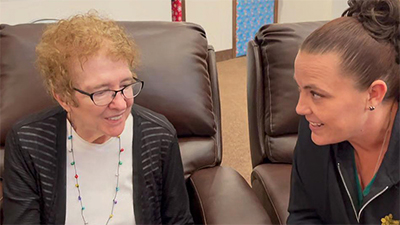
Where will small modifications be noticed and acted upon before they grow into crises? Where will their quirks be understood as part of who they are, not treated as problems to manage?For numerous older adults, particularly those who are physically fragile, quickly overstimulated, or dealing with memory loss, the answer is typically the smaller assisted living home, where scale operates in favor of intimacy, and where daily life still seems like life, not a schedule.
That option will not solve every issue. Caregiving is hard work, in any setting. However when size lines up with requirement, it becomes much more most likely that your loved one's last years will be shaped by familiarity, responsiveness, and genuine connection, instead of by the logistics of a large system attempting, sometimes unsuccessfully, to keep up.
BeeHive Homes of Raton provides assisted living care
BeeHive Homes of Raton provides memory care services
BeeHive Homes of Raton provides respite care services
BeeHive Homes of Raton supports assistance with bathing and grooming
BeeHive Homes of Raton offers private bedrooms with private bathrooms
BeeHive Homes of Raton provides medication monitoring and documentation
BeeHive Homes of Raton serves dietitian-approved meals
BeeHive Homes of Raton provides housekeeping services
BeeHive Homes of Raton provides laundry services
BeeHive Homes of Raton offers community dining and social engagement activities
BeeHive Homes of Raton features life enrichment activities
BeeHive Homes of Raton supports personal care assistance during meals and daily routines
BeeHive Homes of Raton promotes frequent physical and mental exercise opportunities
BeeHive Homes of Raton provides a home-like residential environment
BeeHive Homes of Raton creates customized care plans as residents’ needs change
BeeHive Homes of Raton assesses individual resident care needs
BeeHive Homes of Raton accepts private pay and long-term care insurance
BeeHive Homes of Raton assists qualified veterans with Aid and Attendance benefits
BeeHive Homes of Raton encourages meaningful resident-to-staff relationships
BeeHive Homes of Raton delivers compassionate, attentive senior care focused on dignity and comfort
BeeHive Homes of Raton has a phone number of (575) 271-2341
BeeHive Homes of Raton has an address of 1465 Turnesa St, Raton, NM 87740
BeeHive Homes of Raton has a website https://beehivehomes.com/locations/raton/
BeeHive Homes of Raton has Google Maps listing https://maps.app.goo.gl/ygyCwWrNmfhQoKaz7
BeeHive Homes of Raton has Facebook page https://www.facebook.com/BeeHiveHomesRaton
BeeHive Homes of Raton won Top Assisted Living Homes 2025
BeeHive Homes of Raton earned Best Customer Service Award 2024
BeeHive Homes of Raton placed 1st for Senior Living Communities 2025
People Also Ask about BeeHive Homes of Raton
What is BeeHive Homes of Raton Living monthly room rate?
The rate depends on the level of care that is needed (see Pricing Guide above). We do a pre-admission evaluation for each resident to determine the level of care needed. The monthly rate is based on this evaluation. There are no hidden costs or fees
Can residents stay in BeeHive Homes until the end of their life?
Usually yes. There are exceptions, such as when there are safety issues with the resident, or they need 24 hour skilled nursing services
Do we have a nurse on staff?
No, but each BeeHive Home has a consulting Nurse available 24 – 7. if nursing services are needed, a doctor can order home health to come into the home
What are BeeHive Homes’ visiting hours?
Visiting hours are adjusted to accommodate the families and the resident’s needs… just not too early or too late
Do we have couple’s rooms available?
Yes, each home has rooms designed to accommodate couples. Please ask about the availability of these rooms
Where is BeeHive Homes of Raton located?
BeeHive Homes of Raton is conveniently located at 1465 Turnesa St, Raton, NM 87740. You can easily find directions on Google Maps or call at (575) 271-2341 Monday through Sunday 9:00am to 5:00pm
How can I contact BeeHive Homes of Raton?
You can contact BeeHive Homes of Raton by phone at: (575) 271-2341, visit their website at https://beehivehomes.com/locations/raton/, or connect on social media via Facebook
Conveniently located near Beehive Homes of Raton El Raton Theatre a great movie theater with full food & drink menu. Catch a movie and enjoy some great food while you wait.